

College & Career Readiness

Graduation at CMCSS
Path to Becoming a College & Career Readiness (CCR) Graduate
Must meet graduation requirements and one (1) of the following pathways:
- Meet or exceed a composite of 21 (ACT) or 1060 (SAT)
- Earn a score of 31 or higher on the Armed Services Vocational Aptitude Battery (ASVAB) AFQT
- Earn a Tier 3 Industry Certificiation (IC) or earn a Tier 2 IC and at least one other IC (any tier is acceptable for the second credential)
- Earn one or more “postsecondary credits”

ACT
The ACT is a nationally recognized college and career readiness assessment that helps students understand their strengths and readiness for education and training after high school. The ACT measures skills in English, mathematics, reading, and science and can provide students with information they can use when planning for college, technical education, career training, or the workforce. Tennessee uses an ACT composite score of 21 or higher as one pathway for meeting the College and Career Readiness (CCR) indicator. Tennessee students should also know that science is included when calculating the ACT composite for Tennessee’s CCR purposes, even though ACT’s current national composite score does not include science. The ACT college-readiness benchmarks are:
English: 18, Math: 22, Reading: 22, and Science: 23
In addition, an ACT composite score of 21 or higher can guarantee eligibility for the Tennessee HOPE Scholarship when a student also meets all other HOPE Scholarship requirements, including the applicable Tennessee residency, high school graduation, FAFSA/application, and other eligibility requirements.

ASVAB
The Armed Services Vocational Aptitude Battery (ASVAB) is a career and aptitude assessment that can help students learn more about their strengths, skills, and potential career interests. While the ASVAB is used by the military for career placement, students can also use their results as a tool for career exploration and planning, including identifying areas where they may have strong skills in mathematics, reading, science, technology, mechanics, or other technical areas. Taking the ASVAB can help students better understand their abilities, explore career options, and identify areas they may want to strengthen before entering college, career training, the workforce, or military service. In Tennessee, students who earn an AFQT score of 31 or higher meet the ASVAB College and Career Readiness (CCR) indicator for graduation. Students do not have to enlist in the military to benefit from taking the assessment or to earn the CCR indicator.

Industry Certification (IC)
Postsecondary Credit
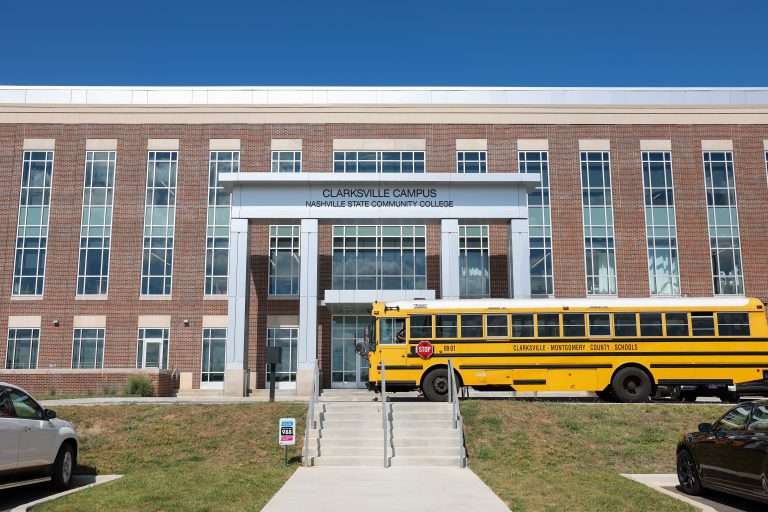
Postsecondary credit gives high school students the opportunity to earn college credit while still in high school through approved Early Postsecondary Opportunities (EPSOs). These opportunities can help students experience college-level work, build confidence, explore academic and career interests, and potentially reduce the time and cost of completing a college degree or credential. In Tennessee, EPSOs that can lead to postsecondary credit include Advanced Placement (AP), Dual Enrollment (DE) and Local Dual Credit (LDC).
For Tennessee’s College and Career Readiness (CCR) indicator, students can meet the postsecondary-credit pathway by earning postsecondary credit through at least one qualifying EPSO. For example, an AP student must earn a score of 3, 4, or 5 on the AP exam for the AP course to count toward this pathway. For Dual Enrollment and Local Dual Credit, the student must successfully earn the associated college credit; simply taking or passing the high school course does not necessarily meet the CCR requirement.